East Canyon State Park
East Canyon State Park in Utah boasts a diverse array of plant life and wildlife, showcasing the natural beauty of the region. Here’s a glimpse of some common plants and animals you might encounter:
Plants
Pinyon Pine and Juniper Trees:
These trees dot the landscape, especially in the higher elevations, contributing to the park’s unique scenery.
Sagebrush:
Common in the area, sagebrush offers a characteristic aroma and serves as an important habitat for various species.
Wildflowers:
During the spring and summer months, the park comes alive with colorful wildflowers like lupine, Indian paintbrush and sunflowers.
Grasses and Shrubs:
Various grass species and shrubs, including rabbitbrush and mountain mahogany, adorn the terrain.
Animals
Mule Deer
Among the most common mammals in the park, frequently seen grazing in open areas.
Elk
Larger than deer, these majestic creatures roam the park, especially in the early mornings and evenings.
Birds
East Canyon attracts a variety of bird species, including red-tailed hawks, eagles, owls, and numerous songbirds.
Small Mammals
Squirrels, chipmunks, rabbits, and occasionally foxes and coyotes inhabit the park’s diverse habitats.
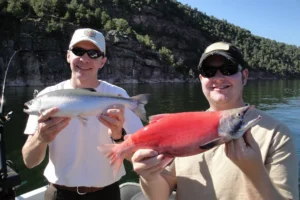
Aquatic Life
Trout

Bass

Salmon
Reptiles and Amphibians
Snakes:
Various snake species, including garter snakes and rattlesnakes, inhabit the area.
Amphibians:
Salamanders and frogs can be found near water sources such as streams and ponds.
Insects and Invertebrates
Butterflies and Bees:
The park is home to various pollinators, with butterflies and bees among the most common.
Invertebrates:
An assortment of insects, including beetles, grasshoppers, and spiders, contribute to the park’s ecosystem.
Home to a rich tapestry of plants and animals, East Canyon State Park is a wonderful place to slow down and enjoy Utah’s natural wildlife! As you explore, please help us care for this special place by keeping a respectful distance from the wildlife and leaving no trace behind—so it stays beautiful for everyone to enjoy.
Conditions: View more park conditions
Hours: 6 a.m. to 10 p.m.
Phone: 801-829-6866
Management
Park Manager: Mercer Owen
Assistant Manager: Jesse Gambrell

52°F
L: 50°
H: 56°
Feels like 50°F°
few clouds
Daily Forecast
Hourly Forecast
Today
50° / 56°°F
0 mm
0%
8 mph
62 %
1016 mb
0 mm/h